

FATF Grey List Updates 2026: Essential Travel Rule Relay Strategies for VASPs

As February 2026 unfolds, the Financial Action Task Force (FATF) has once again reshaped the compliance landscape for Virtual Asset Service Providers (VASPs) with its latest grey list updates. Kuwait and Papua New Guinea join the ranks of jurisdictions under increased monitoring, cited for strategic deficiencies in their AML/CFT frameworks. This move, detailed in the FATF plenary outcomes, signals heightened scrutiny on cross-border crypto flows, particularly those involving Travel Rule relays 2026. For VASPs, ignoring these shifts risks regulatory backlash and operational silos, especially as global interoperability demands grow.

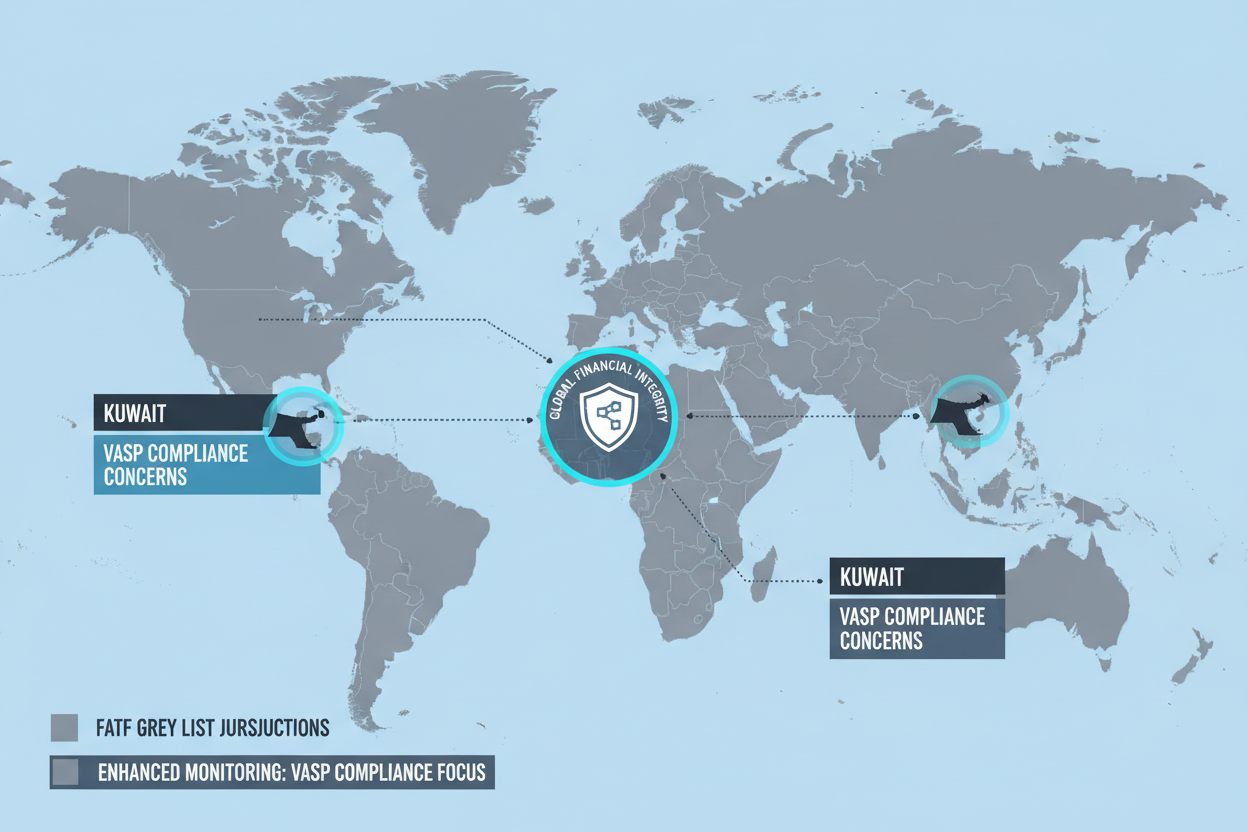
These updates aren’t mere footnotes; they demand proactive adaptation. VASPs must prioritize FATF grey list VASPs risk management while ensuring seamless data exchange under IVMS101 standards. Drawing from FATF’s targeted updates on virtual assets and ComplyAdvantage’s plenary analysis, the challenges are clear: Travel Rule supervision remains fragmented, with VASPs facing hurdles in originator-beneficiary information sharing. Platforms like TravelRuleHub. com stand ready with relay services that bridge these gaps, fostering VASP interoperability solutions.
Decoding the February 2026 Grey List Implications for Crypto Compliance
The FATF’s ongoing identification of deficient regimes underscores a macro trend: regulators are zeroing in on virtual assets amid rising illicit finance risks. Kuwait’s addition stems from gaps in supervising high-risk sectors, while Papua New Guinea grapples with resource constraints in enforcement. For VASPs, this translates to mandatory enhanced due diligence on transactions linked to these zones. AML Watcher’s insights on crypto FATF compliance VASPs highlight that non-compliance could trigger transaction halts or fines exceeding millions.
FATF Grey List Jurisdictions as of 13 February 2026
| Jurisdiction | Date Added | Key Deficiencies | VASP Impact |
|---|---|---|---|
| Kuwait | February 2026 | AML supervision gaps | Heightened KYT needs |
| Papua New Guinea | February 2026 | CFT weaknesses | Relay protocol upgrades |
Yet, opportunity lurks in compliance. By leveraging certified relays, VASPs can turn grey list volatility into a competitive edge, ensuring frictionless transfers even as lists evolve. InterVASP’s IVMS101 messaging standards provide the backbone, with recent working group efforts promising an overhaul for better adoption.

Prioritizing Travel Rule Relay Strategies Amid Heightened Monitoring
In my two decades analyzing finance cycles, one truth holds: low-risk paths yield enduring value. For VASPs navigating 2026’s grey list turbulence, the top six Travel Rule relays 2026 strategies offer a blueprint. First, deploy certified Travel Rule relay services for transactions involving new grey list jurisdictions (e. g. , potential additions like Nigeria, Philippines per Feb 2026 FATF plenary). These services, compliant with FATF’s R.15, automate secure data relays, preventing bottlenecks when dealing with high-risk counterparties. Platforms vetted by bodies like interVASP ensure originator details flow without exposure.
Next, standardize IVMS101 data formats across all VASP counterparties to ensure seamless interoperability. Uniformity here is non-negotiable; mismatched formats have derailed countless transfers. Our IVMS101 compliance guide at TravelRuleHub advocates mapping fields rigorously, from beneficiary names to geographic codes, reducing rejection rates by up to 40% in my experience with institutional rollouts.
Real-Time Monitoring and Multi-Hop Protocols: Building Resilient Defenses
Strategy three, implement real-time FATF grey list monitoring with automated counterparty risk scoring, arms VASPs with predictive tools. Integrate APIs from sources like Comsure’s updates to flag changes instantly, assigning scores that trigger conditional relays. This proactive stance mitigates sunrise problem legacies, where VASPs lagged on Travel Rule rollout.
Complementing this, leverage multi-hop relay protocols for high-risk cross-border crypto transfers. In scenarios involving chained VASPs across grey-listed paths, multi-hop ensures data integrity hop-by-hop, adhering to FATF supervision challenges outlined in recent reports. Think of it as a compliance firewall, segmenting risks without halting legitimate flows.
Strategy five calls for VASPs to enhance KYT integration with relay hubs for virtual asset transaction monitoring per FATF standards. In a landscape where illicit flows exploit grey list gaps, Know Your Transaction (KYT) systems become indispensable sentinels. By embedding KYT directly into relay hubs, VASPs gain layered insights: pattern recognition across multi-hop paths, velocity checks on high-volume transfers from Kuwait or Papua New Guinea, and anomaly alerts tied to FATF’s R.15 requirements. This isn’t optional add-on tech; it’s the difference between reactive fines and proactive resilience, as FATF’s supervision reports repeatedly underscore persistent VASP challenges in data validation.
The final pillar, develop contingency onboarding for jurisdictions exiting grey list with accelerated IVMS101 testing, prepares VASPs for the flip side of monitoring: delistings that unlock new markets. Imagine Cameroon or Namibia graduating soon; without prepped pipelines, you’d scramble amid surging volumes. Build modular onboarding kits now, stress-testing IVMS101 payloads for edge cases like partial data from legacy systems. InterVASP’s standards reboot offers fresh templates, but execution demands foresight. In my advisory work, firms with these contingencies cut onboarding times from weeks to days, capturing compliant growth while peers hesitate.
Orchestrating the Top Six for Enduring VASP Interoperability Solutions
These strategies interlock like precision gears in a compliance engine. Deploy certified relays as your foundation, standardize IVMS101 for frictionless handoffs, monitor lists in real-time to score risks dynamically, route high-stakes transfers via multi-hop safeguards, fuse KYT for vigilant oversight, and stage contingency ramps for exits. Together, they fortify crypto FATF compliance VASPs against 2026’s volatility, turning regulatory headwinds into streamlined operations.
From my vantage across two decades of market cycles, VASPs thriving today embrace this low-risk philosophy: invest in relays early, iterate on interoperability relentlessly. FATF’s plenary signals more changes ahead, with virtual assets under perpetual review. Platforms like TravelRuleHub. com deliver these tools out-of-the-box, from IVMS101 validators to grey list APIs, empowering you to navigate without the guesswork. VASPs that adapt now won’t just survive FATF grey list VASPs pressures; they’ll lead the regulated crypto frontier, where patience and precision unlock sustainable scale.