
Understanding the Crypto Travel Rule
The term "Travel Rule" in 2026 often triggers confusion because it shares its name with aviation security mandates. Beginning February 1, 2026, the Transportation Security Administration (TSA) enforced Real ID requirements for domestic flights, a logistical update unrelated to financial crime. This article focuses exclusively on the financial sector's Travel Rule: the international regulatory framework governing cross-border virtual asset transfers.
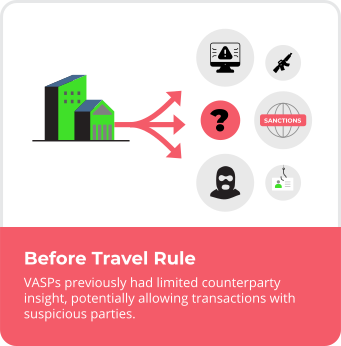
The Travel Rule requires Virtual Asset Service Providers (VASPs) to share specific originator and beneficiary information when transmitting crypto assets across borders. This obligation mirrors requirements for traditional wire transfers under FATF Recommendation 16. The goal is to prevent money laundering and terrorist financing by ensuring transaction data travels with the digital asset.
In 2026, compliance is no longer theoretical. The European Union's implementation of the Markets in Crypto-Assets (MiCA) regulation has solidified these requirements across member states. VASPs operating in or serving EU customers must now adhere to strict data-sharing protocols, with enforcement mechanisms actively applied.
Failure to comply with these regulatory standards exposes VASPs to significant legal penalties and operational restrictions. Understanding the distinction between aviation travel rules and crypto compliance is the first step toward building a robust regulatory framework. The following sections detail the specific obligations for VASPs under the 2026 regulatory landscape.
Verify sender and beneficiary data
The 2026 FATF standard for Travel Rule compliance requires VASPs to collect and transmit specific originator and beneficiary information for virtual asset transfers. This verification process ensures that the identity of both parties is established before the transaction is settled, aligning with the updated Guidance on Virtual Assets and Virtual Asset Service Providers.
Originator information requirements
The originator is the person placing the order or on whose behalf the transaction is being executed. Under the 2026 framework, the following data points are mandatory:
- Full legal name
- Account number or unique identifier
- Physical address or national identity number
- Date and place of birth
Beneficiary information requirements
The beneficiary is the virtual asset service provider receiving the order or the final recipient. The receiving VASP must validate:
- Full legal name
- Account number or unique identifier
- Physical address or national identity number
Data verification and transmission
Compliance requires that the information be transmitted securely and accurately. The receiving VASP must verify the data against its own records and ensure it meets the minimum standards set by the FATF. Any discrepancies must be resolved before the transaction is completed.

Checklist for compliance
- Confirm originator identity matches official records
- Validate beneficiary account details
- Ensure data transmission is encrypted and secure
- Resolve any data discrepancies before settlement
Select a Secure Message Relay Protocol
The Travel Rule requires Virtual Asset Service Providers (VASPs) to exchange originator and beneficiary information with counterpart institutions. This data transmission must occur via a secure, standardized protocol to ensure integrity and confidentiality. Selecting the right message relay infrastructure is not merely a technical preference; it is a compliance imperative.
The Financial Action Task Force (FATF) mandates that VASPs use secure methods to transmit required information. In 2026, with the EU’s Markets in Crypto-Assets (MiCA) regulation fully enforced, interoperability between different relay providers has become a critical operational requirement. A fragmented ecosystem where providers cannot communicate effectively creates compliance gaps and increases the risk of regulatory penalties.
When evaluating relay protocols, prioritize those that support the Virtual Asset Service Provider (VASP) interoperability standards established by the Travel Rule Working Group. Look for providers that offer seamless integration with existing Know Your Customer (KYC) databases and support real-time transaction monitoring. The protocol must also handle large volumes of data without compromising speed, ensuring that cross-border payments are not unduly delayed.

Ensure the relay protocol explicitly supports the FATF Recommendation 16 standards and any regional adaptations, such as the EU’s Travel Rule implementation. Check for certifications from recognized audit firms that validate the protocol’s adherence to data protection laws like GDPR.

Confirm that the provider’s network includes a broad range of counterpart VASPs, including major exchanges and stablecoin issuers. A robust network reduces the need for manual workarounds when transacting with partners who use different relay systems.

Review the provider’s encryption standards, including end-to-end encryption for data in transit and at rest. Verify that the system includes robust access controls and audit logs to track every data exchange, ensuring a clear trail for regulatory examinations.

Run a pilot integration with your existing compliance software to test data flow and error handling. Assess the provider’s technical support responsiveness, as timely assistance is crucial when resolving transaction blocks or data mismatches during live operations.
The choice of relay protocol directly impacts your ability to operate across borders. A well-chosen infrastructure reduces friction, minimizes compliance risk, and ensures that your VASP remains aligned with evolving global standards. Prioritize providers that demonstrate a commitment to ongoing regulatory alignment and technical innovation.
Handle threshold and jurisdiction rules
The FATF Travel Rule applies globally, but national implementations vary significantly in transaction thresholds and data requirements. VASPs must configure their compliance engines to detect and process information based on the specific jurisdiction of the originator and beneficiary. In 2026, the European Union’s MiCA framework and the UK’s FCA guidelines have solidified stricter data fields, while the United States continues to rely on FinCEN’s interpretation of Bank Secrecy Act requirements.
Compliance officers should prioritize mapping these thresholds against their internal transaction monitoring systems. Failure to distinguish between jurisdictions can result in failed transfers or regulatory penalties. The table below outlines the primary thresholds and key data requirements for major jurisdictions.
| Jurisdiction | Threshold | Key Requirement |
|---|---|---|
| European Union | €1,000 | Full originator/beneficiary name and account number |
| United States | $3,000 | Name, physical address, and account number |
| United Kingdom | £1,000 | Name, account number, and official ID number |
| Japan | ¥50,000 | Name and account number; strict data localization |
The European Union’s implementation, effective since 2024 and fully enforced in 2026, mandates a lower threshold of €1,000 compared to the FATF’s original recommendation. This requires VASPs operating in the EU to capture more granular data, including the originator’s physical address and official ID number for certain transactions. In contrast, the United States maintains a higher threshold of $3,000, focusing primarily on name, address, and account details.
For cross-border transactions, the VASP must identify the applicable jurisdiction based on the source and destination of the funds. If a transaction originates in the EU and terminates in the US, the stricter EU data requirements typically apply to the outbound leg. Compliance systems must automatically flag these mixed-jurisdiction flows to ensure that no required data field is omitted during the transfer.
Regulatory bodies such as the FATF and FinCEN emphasize that "like-for-like" data transmission is essential. This means that if the originating VASP collects specific data points required by its local regulator, the beneficiary VASP must receive that same level of detail. VASPs should regularly audit their messaging protocols to ensure compatibility with partners in high-risk jurisdictions.
Audit and resolve failed transfers
When a VASP rejects or fails to process a Travel Rule transfer, the issue typically stems from incomplete originator data, mismatched beneficiary details, or non-compliant messaging formats. Rapid resolution is essential to prevent funds from being frozen indefinitely and to maintain the integrity of the compliance record. The following steps outline the standard troubleshooting path for resolving these technical and regulatory discrepancies.
Review the original transaction request to ensure all required fields are populated. Per FATF guidance, the originator’s name, account number, and address must be complete. If any field is missing or contains placeholder text, the counterparty VASP is justified in rejecting the transfer. Re-submit the transaction with the full, verified beneficiary details.

Ensure the data payload conforms to the agreed-upon schema (e.g., SWIFT MT103, ISO 20022, or proprietary VASP APIs). Common errors include incorrect character encoding, invalid date formats, or missing mandatory tags. Consult the technical documentation of the counterparty’s compliance gateway to align your message structure with their specific validation rules.
Compare the originator’s name and address against the counterparty’s reported beneficiary information. If the beneficiary name does not match exactly or the address is truncated, the transfer will fail compliance checks. Request updated KYC documents from the originator to correct the record, then re-initiate the transfer with the precise legal name and full residential address.
Verify that the counterparty VASP is registered with its local financial intelligence unit (FIU) or regulatory body. If the destination VASP is unregistered or has lost its license, it may not be able to accept Travel Rule data. In such cases, pause the transfer and redirect the funds to a compliant intermediary or a different counterparty that meets regulatory standards.
Maintain a detailed log of the failed attempt, including the error codes, timestamps, and corrective actions taken. This documentation is critical for internal audits and regulatory examinations. If the failure persists despite corrective measures, report the incident to your compliance officer and consider filing a Suspicious Activity Report (SAR) if fraud or money laundering is suspected.
Travel rule 2026: common: what to check next
The 2026 regulatory landscape for cross-border crypto transactions introduces stricter enforcement mechanisms under FATF Recommendation 16. Compliance requires precise data handling and interoperability between Virtual Asset Service Providers (VASPs). The following questions address the most frequent operational challenges for legal and compliance teams.
Navigating these requirements demands a robust compliance infrastructure. Organizations should prioritize automated transaction monitoring and secure messaging protocols to ensure adherence to the evolving 2026 standards.
No comments yet. Be the first to share your thoughts!