
Why the 2-year visa matters in 2026
The shift toward two-year digital nomad visas represents a structural change in remote work immigration. Unlike the standard six-month renewable permits, a 24-month term provides the legal stability required for serious financial planning. For remote workers, this duration is not merely a convenience; it is a compliance safeguard that simplifies tax residency tracking and long-term housing contracts.
Short-term renewable visas create administrative friction. Each renewal cycle requires re-verification of income, health insurance, and background checks. This recurring burden can disrupt workflow and create gaps in legal status if processing times delay. A two-year visa locks in your legal standing for a full fiscal year cycle, allowing you to focus on work rather than paperwork.
From a regulatory perspective, longer validity periods signal that a country is treating remote work as a stable economic contribution rather than temporary tourism. This distinction matters for high-stakes planning. It allows you to sign longer leases, open local bank accounts with greater ease, and build a consistent credit history in your host country. The certainty of a 24-month window outweighs the perceived flexibility of shorter terms.
10 Countries With 2-Year Remote Work Residency
Selecting the right jurisdiction requires comparing specific regulatory frameworks, not just lifestyle perks. Below are ten countries offering two-year digital nomad visas, analyzed for their legal stability, income requirements, and tax implications.
- Portugal: The D8 Visa allows for a two-year initial stay, renewable for up to five years. It requires proof of stable remote income (typically €3,040/month) and is a gateway to permanent residency. Tax benefits may apply under the NHR regime, though rules are tightening.
- Spain: The Digital Nomad Visa (LEV) offers a two-year initial term, renewable for up to five years. It requires a minimum income of roughly €2,600/month and offers a favorable tax regime for remote workers under the Beckham Law.
- Estonia: The e-Residency combined with a Digital Nomad Visa provides a two-year permit. With a high income threshold (€4,507/month), it targets high earners. Estonia offers a transparent digital infrastructure and clear legal pathways.
- Croatia: The Temporary Stay for Digital Nomads is valid for up to two years. It requires proof of income (€2,430/month) and health insurance. Croatia is part of the EU Schengen area, facilitating travel within Europe.
- Germany: The new Freelance Visa or Self-Employment Visa can be structured for remote workers, often issued for two years initially. It requires proof of livelihood (€3,500/month) and a clear business plan. Tax residency is strictly enforced after 183 days.
- Greece: The Digital Nomad Visa is valid for two years, renewable for up to five. It requires a monthly income of €3,500. Greece offers a 50% tax reduction for new residents for five years, making it financially attractive.
- Italy: The Elective Residence Visa or specific digital nomad provisions allow for two-year stays. The income requirement is approximately €2,800/month. Italy requires proof of substantial housing and health coverage.
- Malta: The Nomad Residence Permit is valid for one year, renewable up to four years. While the initial term is shorter, it effectively functions as a multi-year stable permit. The income requirement is €2,700/month.
- Czech Republic: The Long-Term Stay for Business Purposes can be issued for up to 10 years, but initial approvals often start at one year, renewable. The income threshold is lower (€1,800/month), but the application fee is high (€5,500 for the full term).
- Latvia: The Digital Nomad Visa is valid for up to five years. It has one of the lowest income thresholds (€1,200/month) but requires proof of accommodation and health insurance. It is a cost-effective option for EU access.
Digital Nomad Visa Costs and Income Rules
Comparing visa requirements across jurisdictions requires careful attention to financial thresholds and fee structures. While the 2026 Digital Nomad Visa Index highlights living costs and tax treatment as primary differentiators, the immediate barriers to entry are often the application fees and minimum income documentation required by consulates [[src-serp-5]]. Applicants generally must demonstrate steady income, typically ranging from €3,000 to €4,000 per month, alongside valid health insurance and proof of accommodation [[src-serp-3]].
The table below outlines the key metrics for the ten leading destinations, focusing on income requirements, visa fees, and renewal terms. Note that specific pricing and income thresholds are subject to change based on local regulations and exchange rates. Always verify current figures with official government immigration portals or established legal firms before applying.
| Country | Min. Monthly Income | Visa Fee | Renewal Terms |
|---|---|---|---|
| Portugal | €3,040 | €75 | Up to 5 years |
| Spain | €2,600 | €60 | Up to 5 years |
| Estonia | €4,507 | €100 | Up to 5 years |
| Croatia | €2,430 | €80 | Up to 2 years |
| Germany | €3,500 | €105 | Up to 3 years |
| Greece | €3,500 | €75 | Up to 5 years |
| Italy | €2,800 | €50 | Up to 2 years |
| Malta | €2,700 | €28 | Up to 1 year |
| Czech Republic | €1,800 | €5,500 | Up to 10 years |
| Latvia | €1,200 | €70 | Up to 5 years |
Income thresholds are often calculated as a multiple of the local minimum wage or a fixed percentage of the national average salary. For instance, some jurisdictions require proof of funds equivalent to 12–24 months of living expenses, even if the monthly income requirement appears modest [[src-serp-6]]. Visa fees vary significantly, with some countries charging nominal administrative fees while others impose higher costs for expedited processing or family dependents.
Tax implications are a critical consideration. Most digital nomad visas do not automatically confer tax residency, but staying beyond 183 days in a calendar year may trigger local tax obligations. Some countries offer favorable tax regimes for remote workers, while others require full compliance with local income tax laws. Consult a tax professional to determine your specific liabilities.
Essential gear for remote work abroad
Operating remotely from a foreign jurisdiction introduces technical risks that can jeopardize both your employment compliance and visa status. A dropped video call or a failed tax filing deadline due to poor connectivity is not merely an inconvenience; it is a potential breach of contract or regulatory requirement. To mitigate these liabilities, you must equip yourself with reliable hardware that ensures consistent performance regardless of local infrastructure.
The foundation of your remote workspace is a high-performance laptop capable of handling multiple time zones and data-heavy applications. You will also need a portable Wi-Fi router to bypass unreliable hotel or Airbnb internet, along with a universal power adapter to ensure your devices remain charged across different electrical standards. These items form the critical infrastructure for maintaining professional obligations while abroad.
The following products represent the core equipment necessary for stable, compliant remote work. They are selected for reliability and compatibility with international power systems.


As an Amazon Associate, we may earn from qualifying purchases.
Investing in this specific gear minimizes the risk of technical failure. By ensuring your connectivity and power needs are met, you can focus on fulfilling your legal and professional duties in your host country.
Digital nomad visa application checklist
Applying for a two-year remote work residency requires precise documentation. Immigration authorities scrutinize financial stability and legal compliance. Missing a single certified translation or invalidating a document can delay your entry or lead to rejection.
Follow this ordered checklist to prepare your digital nomad visa application. Each step addresses a core requirement common to most 2026 programs, including those in Europe and Latin America.
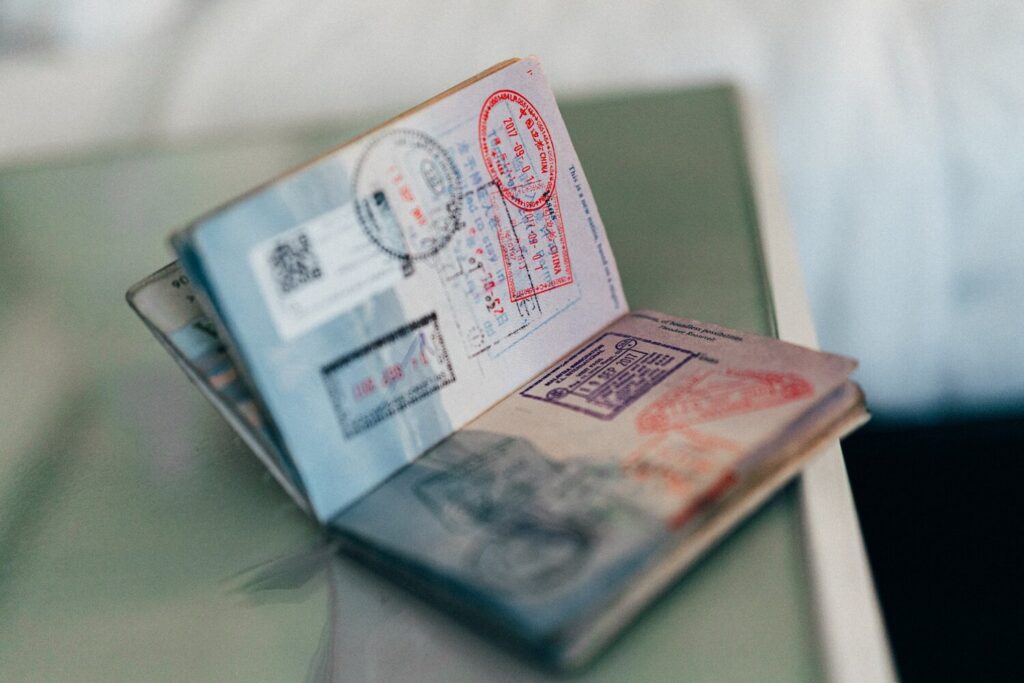
Ensure your passport has at least six months of validity beyond your intended stay. Some countries require blank pages for entry stamps. If your passport expires soon, renew it before starting the application.

Provide bank statements, employment contracts, or freelance invoices proving a minimum monthly income, typically €3,000–€4,000. Authorities need evidence that you will not seek local employment. Keep these records updated, as some programs require proof at the time of entry.

Purchase health insurance that covers the entire duration of your stay. The policy must include repatriation and emergency medical coverage. Generic travel insurance is often insufficient; verify that the provider explicitly covers long-term residency.
Obtain a clean criminal record certificate from your country of residence. Most jurisdictions require this document to be issued within the last three to six months. You will likely need an apostille or consular legalization to validate it abroad.
Submit a rental agreement or hotel reservation for your initial stay. While some countries allow you to find housing later, proving where you will live is often a prerequisite for visa issuance. Keep digital and physical copies of all leases.
Many countries require a signed declaration stating your tax residency status in your home country. This helps determine if you will be taxed in the host country. Consult a tax advisor to ensure this document accurately reflects your situation.
Provide a letter from your employer or clients confirming that your work is performed remotely and that you do not intend to seek local employment. This letter should be on company letterhead and signed by a supervisor.
All non-native language documents must be translated by a certified translator. Some countries require these translations to be notarized or apostilled. Check the specific requirements of the destination country to avoid rejection.

Book an appointment at the local embassy or consulate well in advance. Bring all original documents and copies. Be prepared to answer questions about your financial stability and intentions in the country.

Submit your complete application package along with the required visa fee. Keep a copy of the submission receipt. Processing times vary, so apply at least 2-3 months before your planned travel date.


As an Amazon Associate, we may earn from qualifying purchases.
Once your documents are prepared, submit them through the official government portal or designated embassy. Double-check that all translations are certified. Legal compliance is non-negotiable; errors in your application can result in permanent bans from certain jurisdictions.
No comments yet. Be the first to share your thoughts!