
Check if you qualify for a 2026 digital nomad visa
Before gathering documents, verify that your employment structure matches the host country’s legal definition of a digital nomad. A digital nomad visa grants the right to reside in a foreign country while employed by a company based elsewhere. You must prove that your income originates from outside the host nation, not from local clients or residents. This distinction prevents you from entering the local labor market, which is typically prohibited on this visa category.
The core eligibility criteria generally fall into three buckets:
- Remote Employment Status: You must have a valid employment contract or proof of freelance income from a foreign entity. Local employment disqualifies you.
- Minimum Income: Most programs require proof of funds exceeding 80–200% of the local minimum wage. For example, Spain and Portugal often cite specific euro amounts (e.g., €2,600–€3,000) as the baseline.
- Clean Record: You must provide a criminal background check from your country of residence, usually apostilled and translated.
Use the official government immigration website of your target country as the primary source for these figures. Private blogs may cite outdated thresholds. If your income fluctuates, ensure you can demonstrate average monthly earnings over the past six to twelve months through bank statements or tax returns.
Compare top destinations for remote workers in 2026
Choosing the right jurisdiction requires balancing three factors: income thresholds, tax treatment, and processing speed. The following table compares four popular digital nomad visa options to help you assess which fits your situation.
| Country | Min. Income (Monthly) | Visa Duration | Tax Status |
|---|---|---|---|
| Spain | ~€2,600 | 1 year (renewable) | Non-resident tax (24% flat) |
| Portugal | ~€3,280 | 1 year (renewable) | NHR regime (phasing out) |
| Croatia | ~€2,300 | 1 year | No income tax for 18 months |
| Thailand | ~€700 | 5 years (LTR) | Tax on remitted income |
Spain and Portugal remain European favorites, but their income requirements are among the highest in the region. Spain’s flat 24% tax rate for non-residents offers predictability, while Portugal’s historic NHR regime is gradually phasing out, making long-term tax planning more complex.
Croatia offers a compelling middle ground with lower income requirements and a temporary tax exemption for new residents. Thailand’s Long-Term Resident (LTR) visa stands out for its five-year duration and significantly lower income threshold, though it requires a different approach to tax residency management.
Processing times vary significantly. Spain and Portugal typically take 2–4 weeks once applications are submitted, while Thailand’s LTR process involves a more rigorous background check that can extend to several months. Always verify current processing times on official government immigration websites before applying.
Prepare your documents for the 2026 digital nomad visa
Gathering the right paperwork is the difference between a smooth approval and a rejection. Most digital nomad visa applications fail because of incomplete or improperly formatted documents. You need to prove you can support yourself without local employment and that you pose no security risk.
Start by collecting your proof of remote employment. You will need a contract or letter from your employer stating your role, salary, and that your work is fully remote. This document confirms you are not entering the local labor market. Alongside this, provide recent bank statements—typically the last three to six months—to show steady income. Many European countries require a minimum monthly income, often between €3,000 and €4,000, though this varies by destination.
Next, secure valid health insurance that covers your entire stay. Standard travel insurance is rarely enough; you need a policy that meets the specific minimum coverage requirements of the host country. You will also need a clean criminal record certificate from your home country. This document usually requires an apostille or notarization to be valid internationally.
Finally, arrange proof of accommodation. This can be a rental agreement, hotel booking, or a letter from a host. Keep all documents translated into the official language of the country you are applying to if required. Use the checklist below to ensure you have every item ready before you submit your application.
-
Proof of remote employment (contract or employer letter)
-
Recent bank statements (3-6 months)
-
Valid health insurance meeting local requirements
-
Clean criminal record certificate (apostilled if required)
-
Proof of accommodation (rental or hotel booking)
Submit your 2026 digital nomad visa application
The application phase is where most candidates encounter friction. Unlike tourist visas, the digital nomad visa requires a standardized packet of documents that must meet strict formatting rules. Your first task is to gather these materials before you touch the application form. You will need a valid passport, proof of remote employment or freelance contracts, recent bank statements showing sufficient income, and a clean criminal background check. Ensure all non-English documents are translated by a certified translator.
Most countries, including Spain and Portugal, require you to fill out a specific government form online. Double-check every field against your passport. A single typo in your name or passport number can trigger a rejection or delay your processing by weeks.
After submitting the form, you must book an appointment at the nearest consulate or visa application center. These slots fill up quickly, especially in popular destinations like Portugal and Estonia. Book as early as the system allows.
Bring your original documents and printed copies of your application to the appointment. You will provide fingerprints and a photo. The consular officer may ask about your income source or remote work setup. Answer clearly and concisely.
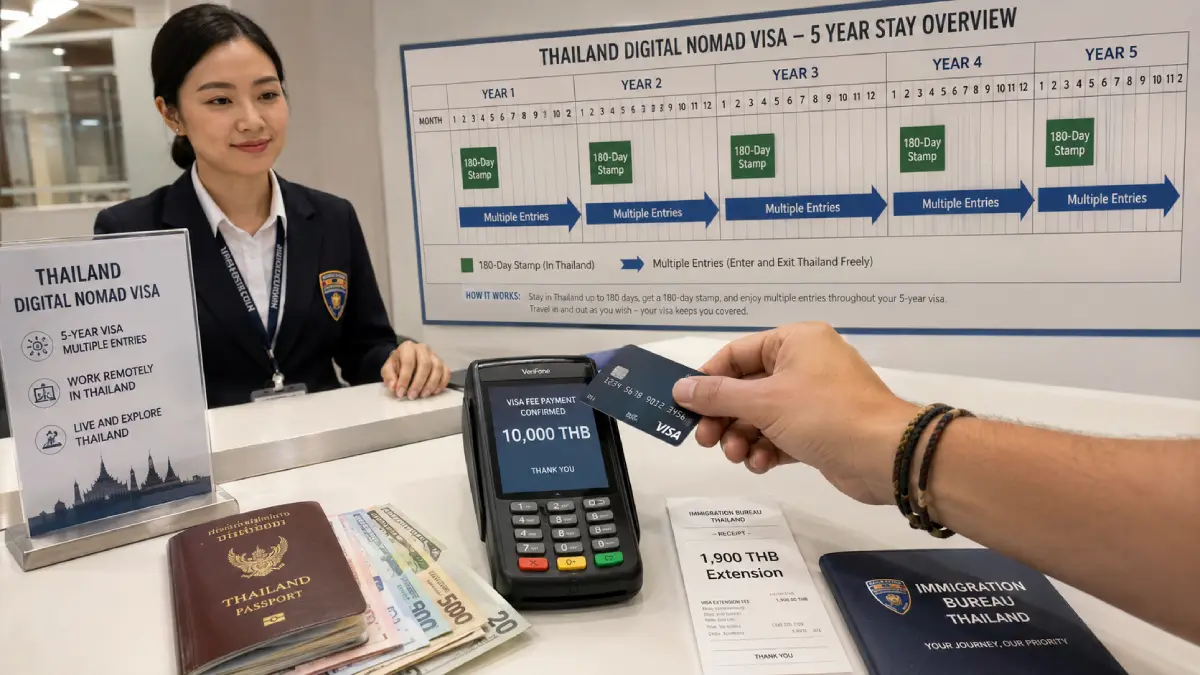
Processing times vary from two weeks to three months. You can usually track your application status online using the reference number provided during submission. Do not book non-refundable travel until you have the visa sticker or digital approval.
Pay close attention to where you submit. Some countries allow you to apply from abroad at their consulate, while others require you to apply for a temporary entry visa first, then convert it to a digital nomad visa once you arrive. Check the specific rules for your target country to avoid illegal entry or visa overstay.
Avoid common mistakes in your 2026 digital nomad visa process
Most visa rejections stem from avoidable errors in documentation rather than a lack of remote work experience. Immigration officers look for strict adherence to specific criteria, and small oversights can lead to immediate denial or legal complications. Focus on these critical areas to ensure your application is complete and compliant.
Submitting insufficient income proof
Many applicants underestimate the financial thresholds set by host countries. You must provide clear, verifiable evidence of steady income, typically ranging from €3,000 to €4,000 per month depending on the destination. Bank statements alone are often insufficient; include employment contracts, recent pay stubs, or tax returns to demonstrate consistency. Failure to meet these minimums is the most common reason for rejection.
Relying on generic travel insurance
A standard travel insurance policy is rarely accepted for a digital nomad visa. You need comprehensive health coverage that explicitly includes long-term residency and repatriation. Some countries require proof of insurance valid for the entire duration of your stay, not just a short-term trip. Verify that your policy meets the specific medical coverage limits mandated by the host country’s immigration authority.
Overlooking accommodation proof
Immigration officials often require proof of where you will live upon arrival. This can be a rental agreement, hotel reservation, or a letter from a host. Ensure this document covers the initial period of your stay and matches the dates on your visa application. Inconsistent addresses between your application and supporting documents can raise red flags during the review process.
Ignoring document authentication
Documents must often be notarized, apostilled, or translated into the official language of the host country. Submitting unverified copies or documents in the wrong language can invalidate your entire application. Check the specific authentication requirements for each document type well in advance. Delays in obtaining these certifications can push your application timeline into uncertainty.
No comments yet. Be the first to share your thoughts!