
Verify your identification documents
Before packing your bags, confirm that your identification meets current federal and international standards. Traveling with expired, damaged, or non-compliant IDs is the fastest way to miss a flight or face entry denial abroad. The process differs slightly depending on whether you are flying domestically within the United States or crossing international borders.
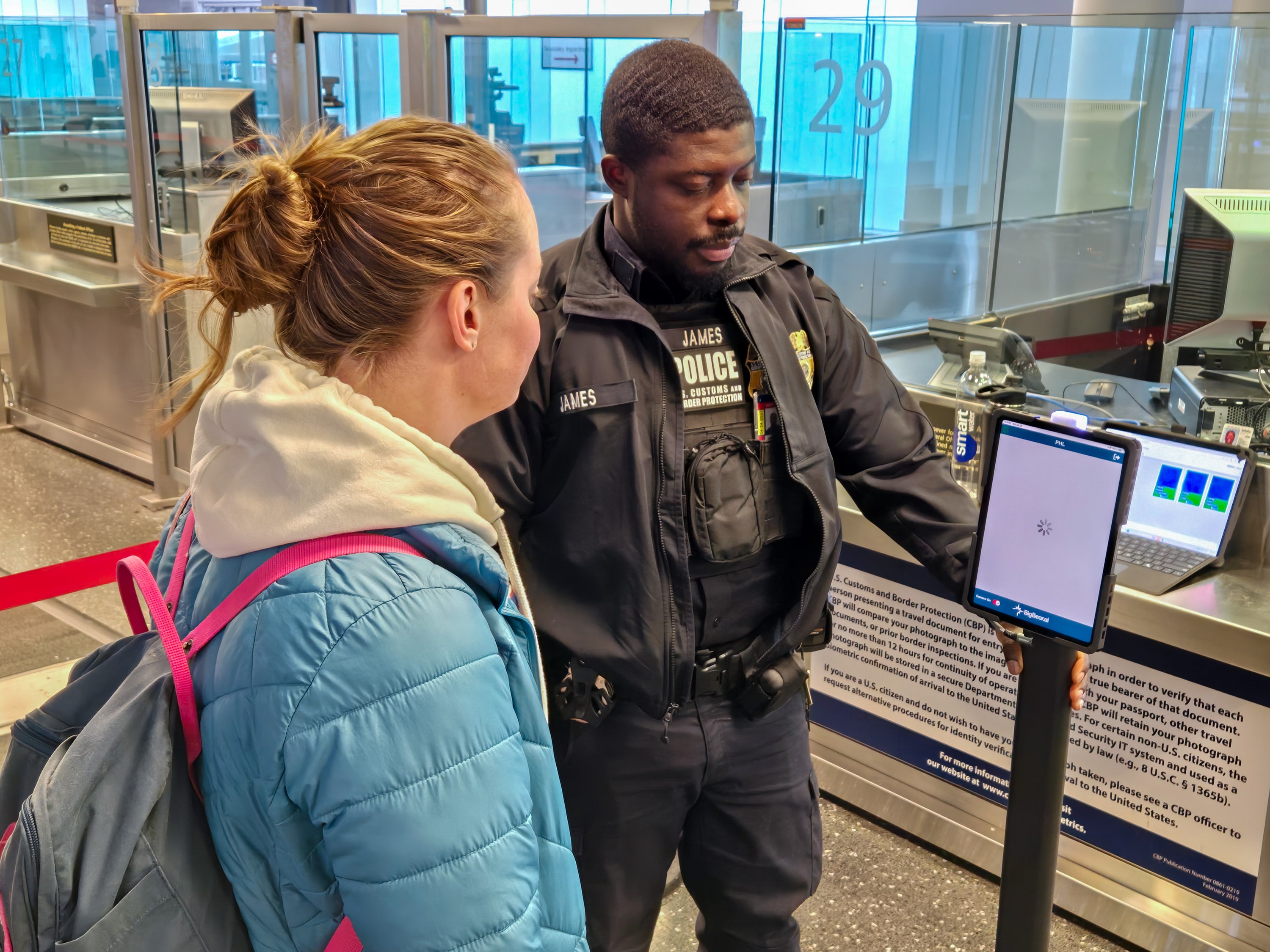
For domestic air travel, the Transportation Security Administration (TSA) requires a valid, REAL ID-compliant driver’s license or state-issued ID. If your current license lacks the black border and star in the upper corner, you must apply for an upgrade before your trip. You can verify your state’s compliance status and appointment requirements on the official DHS REAL ID website. Carrying a standard driver’s license without the star will result in denial at security checkpoints.

International travel requires a passport that remains valid for a specific period beyond your return date. While U.S. rules typically require validity for the duration of your stay, many countries enforce a "three-to-six-month rule." This means your passport must not expire within three to six months of your planned departure from that country. Check the specific entry requirements for your destination on the U.S. State Department’s travel website to avoid being turned away at immigration.

TSA agents and airline staff will reject IDs with significant wear. Laminated cards, cracked plastic, or faded barcodes can prevent scanners from reading your information. For passports, ensure there are no torn pages, loose bindings, or water damage. If your document is damaged, apply for a replacement immediately. Do not attempt to repair damaged IDs yourself, as this voids their validity.
Keep these documents in a secure, easily accessible place. Having them ready before you arrive at the airport or border crossing speeds up the verification process and reduces stress. If you are unsure about your document’s status, contact the issuing authority or visit the official government portal for clarification before your travel date.
Apply for required digital entry permits
Starting in 2026, the European Union and the United Kingdom will require digital travel authorizations for many visa-exempt visitors. These systems—ETIAS for Europe and the UK ETA for the United Kingdom—function as pre-screening tools rather than traditional visas. You must complete these applications before booking non-refundable travel, as approval is not guaranteed.
1. Verify your eligibility
Not every traveler needs a new permit. Check the official government websites to see if your nationality requires an ETIAS or UK ETA. Generally, citizens of visa-waiver countries must apply. If you already hold a valid visa or residence permit for the destination, you may not need to apply for the digital authorization. Ensure your passport is valid for at least three to six months beyond your planned return date.
2. Complete the online application
Visit the official ETIAS portal or the UK ETA website to begin your application. You will need a valid passport, a credit or debit card, and a working email address. The forms ask for personal details, travel history, and security questions. Be precise; errors in your name or passport number can lead to application rejection or delays at the border.
3. Submit and wait for approval
Most applications are processed within minutes, but some can take up to 30 days if additional documentation is required. You do not need to wait for the final approval email to book your flights, but you should not travel until you have received confirmation. The authorization is linked electronically to your passport, so you will not receive a physical sticker or stamp.
4. Keep records for your trip
Save a digital copy of your approval email and print a hard copy to keep with your travel documents. Border agents may ask to see proof of your authorization before allowing you to board your flight or enter the country. Having this document ready speeds up the check-in process and prevents last-minute issues at the airport.
Review airline and baggage policies
Airline rules are tightening as carriers adjust to new revenue models and security requirements. Before booking, check the specific fare rules for your chosen carrier. Policies on seat assignments, basic economy restrictions, and lithium battery scrutiny have shifted significantly for 2026.
Seat assignments and basic economy
The era of free, open seating is ending for most major US carriers. Southwest Airlines is rolling out assigned seating across its fleet, moving away from its traditional open-board model. This change affects how you plan your arrival at the gate and your ability to choose seats in advance.
Basic economy fares now carry stricter penalties. Most carriers prohibit seat selection entirely on these tickets, assigning you randomly at check-in. Changes to these tickets often incur higher fees than standard economy fares. Verify if your planned itinerary requires flexibility before committing to the lowest fare tier.
Lithium battery scrutiny
Security checkpoints are enforcing stricter rules on lithium batteries. The TSA is cracking down on loose power banks and spare batteries in carry-on bags. All spare lithium batteries must be carried in your carry-on luggage, never in checked bags. Ensure terminals are protected from short circuits by placing batteries in original packaging or tape-covered terminals.
Comparison of pre-2026 vs. 2026 policies
The table below highlights key shifts in seat selection and baggage fee structures for major US carriers.
| Carrier | Seat Assignment | Basic Economy | Carry-On Fee |
|---|---|---|---|
| Southwest | Assigned (Rolling Out) | N/A | Free |
| Delta | Paid (Standard) | Random Assignment | Free |
| United | Paid (Standard) | Random Assignment | Free |
| American | Paid (Standard) | Random Assignment | Free |
| JetBlue | Paid (Standard) | Random Assignment | Free |
Check consumer protection updates
The Department of Transportation (DOT) has tightened enforcement around passenger rights, making it essential to verify your refund eligibility before booking. In early 2026, new data reporting requirements mean airlines must disclose complaint trends more transparently, giving you leverage if you encounter service failures.
Start by reviewing the airline’s refund policy for your specific itinerary. Federal rules mandate a prompt refund if the carrier significantly changes your schedule or cancels a flight, even for non-refundable tickets. Do not assume that a "non-refundable" label means you cannot get your money back; the DOT has explicitly clarified this distinction in recent guidance.
If you face a dispute, file a complaint directly with the DOT. The agency tracks these submissions to identify airlines that consistently violate consumer protection standards. You can monitor these trends on the DOT’s Air Travel Consumer Report page to see how your carrier ranks against industry benchmarks.
Keep records of all communications, including emails and chat transcripts. When filing a complaint, include your confirmation number and a timeline of events. The DOT requires specific details to investigate effectively, and having a clear paper trail speeds up the resolution process.
Finalize your travel compliance checklist
Before you leave, run through this final sequence to ensure every requirement is met. Missing one detail can lead to denied boarding or entry delays.
Frequently asked questions about 2026 travel
Travelers often ask how recent regulatory updates affect their upcoming trips. Below are specific answers to common questions about passport validity, TSA screening, and airline policies for 2026.
No comments yet. Be the first to share your thoughts!