
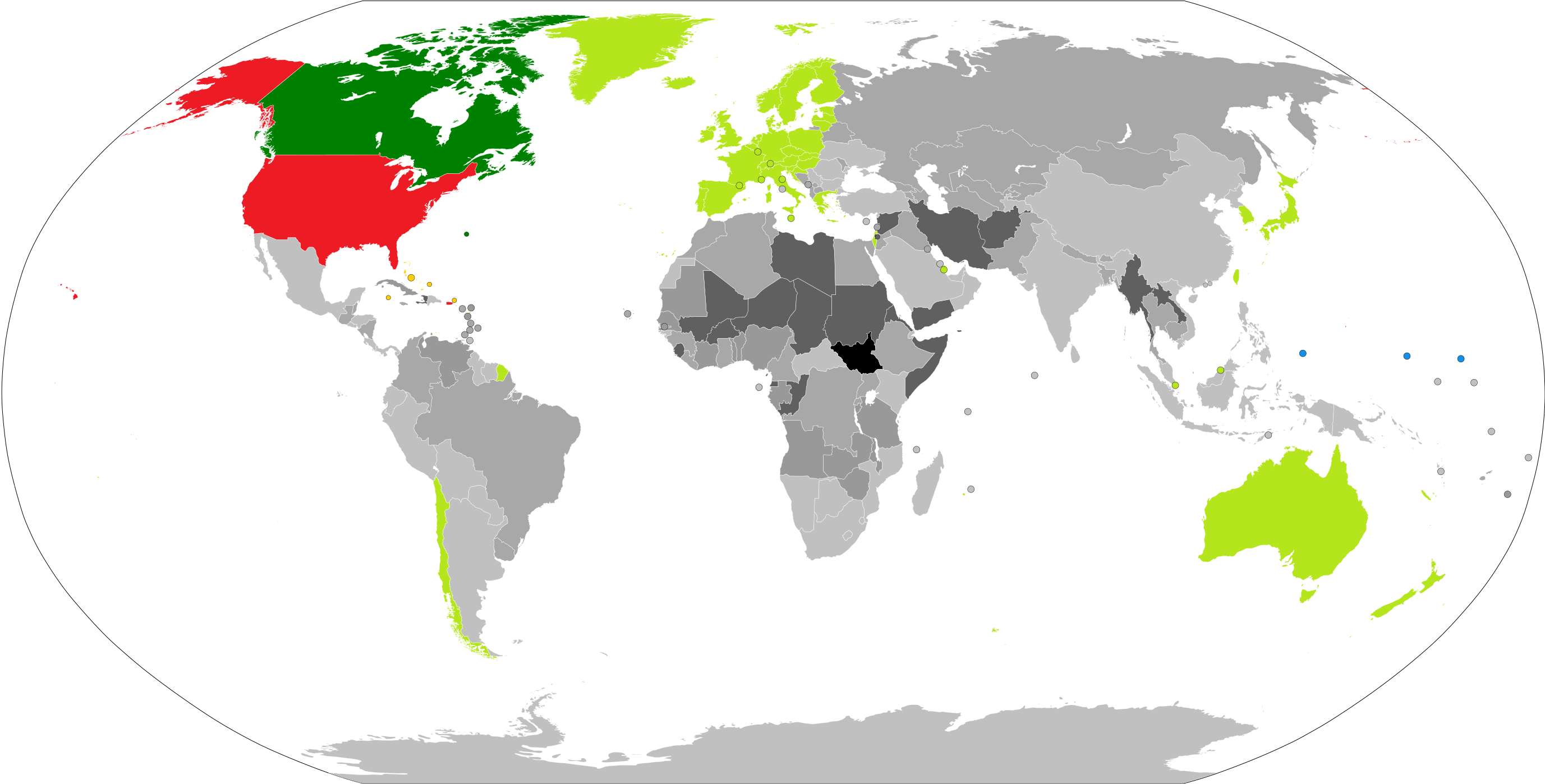
Visa-free travel 2026
Navigating entry rules for 2026 requires checking specific bilateral agreements rather than relying on general trends. This list highlights ten destinations where US passport holders can currently enter without a traditional visa sticker, though electronic authorizations or duration limits often apply.
We selected these destinations based on current official government notices and primary source updates. For example, China has extended its visa-free entry policy through December 31, 2026, allowing 30-day stays for eligible travelers from 46 countries, including the US. Similarly, the Visa Waiver Program (VWP) remains the backbone for European travel, permitting stays up to 90 days for tourism or business.
Each entry in the upcoming list reflects the most recent verified status. We prioritize destinations with clear, accessible entry paths for US citizens, distinguishing between true visa-free access and those requiring simple electronic pre-authorizations like ETIAS or ESTA.
10 2026 Visa-Free Travel Update: Top 10 Destinations for US Passport Holders This Year
The 2026 visa-free landscape for US passport holders has shifted, with updated entry requirements and new digital authorization mandates affecting travel plans. This list identifies the top 10 destinations offering seamless access, detailing specific visa waivers, ETIAS implications, and practical entry checks for immediate use.
1. Schengen Area 90-day rule updates
The Schengen Zone now enforces a rolling 90-day limit within any 180-day period, calculated backward from your current date of stay. This strict accounting prevents "clock resets" by leaving for a neighboring non-Schengen country. Travelers must track their days meticulously to avoid overstay fines, as border officials cross-reference entry stamps with digital systems.
2. United Kingdom Electronic Travel Authorization
The UK has replaced the previous waiver system with a mandatory Electronic Travel Authorization (ETA) for most US citizens. You must apply online before booking flights, with approvals typically arriving within three business days. This digital pre-screening replaces the old visa-waiver entry process, ensuring stricter security checks before you even board your flight to London or Edinburgh.

3. Japan visa exemption duration changes
Japan maintains a 90-day visa exemption for tourism, but enforcement has tightened regarding proof of onward travel and sufficient funds. Immigration officers may scrutinize itineraries more closely, requiring clear return tickets and bank statements. While the duration remains unchanged, the burden of proof for temporary stay intent has increased significantly for short-term visitors.

4. South Korea K-ETA requirements
South Korea requires US passport holders to obtain a Korea Electronic Travel Authorization (K-ETA) prior to arrival. This online form captures biometric and travel data, valid for two years. Processing usually takes 24 hours, but applicants should apply at least a week before departure to account for potential administrative delays or additional document requests.

5. Australia ETA subclass 601 details
US citizens must secure an Electronic Travel Authority (ETA) subclass 601 before traveling to Australia. This electronic visa is linked to your passport and allows stays of up to three months per visit. The application is processed through the official Australian government app or authorized airlines, eliminating the need for physical visa labels or stickers.

6. New Zealand Electronic Travel Authority
US citizens must secure an NZeTA before boarding flights to New Zealand, a digital pre-screening distinct from a traditional visa. This system enhances border security while streamlining entry for short-term tourism or business trips. Travelers should apply online via the official mobile app or website, allowing sufficient processing time to avoid last-minute travel disruptions or denied boarding at departure gates.

7. Brazil visa waiver program status
Brazil reinstated visa-free entry for US tourists in late 2024, a policy expected to remain stable through 2026. This change eliminates the previous e-visa requirement, simplifying travel planning for leisure and short business visits. Travelers must still hold a passport valid for at least six months beyond their intended stay and provide proof of onward travel to Brazilian immigration officials upon arrival.
8. Argentina visa-free entry conditions
US passport holders enjoy visa-free tourism entry to Argentina for stays up to 90 days. While no visa is required, travelers must purchase a reciprocity fee upon arrival, a cost that fluctuates based on currency exchange rates. Ensure your passport has ample blank pages for entry stamps, and verify current health or vaccination requirements before booking flights to avoid unexpected entry hurdles.

9. Chile visa exemption for tourists
Chile permits US citizens to enter visa-free for tourism or business for up to 90 days. The Immigration Authority may grant an extension for another 90 days, provided you apply before the initial period expires. Keep a copy of your entry stamp and proof of sufficient funds, as border agents occasionally request evidence of financial stability during random checks at Santiago International Airport.

10. Uruguay visa-free travel guidelines
Uruguay offers visa-free entry to US tourists for stays of up to 90 days, making it a straightforward destination for short-term visits. Travelers must present a valid passport and proof of onward or return travel. While no visa is needed, ensuring your passport validity extends well beyond your departure date is crucial, as strict enforcement of the six-month rule can lead to denied entry at Montevideo airports.

Pick the right fit
Choosing a destination isn't just about the visa waiver; it's about matching the entry rules to your travel style. The Visa Waiver Program (VWP) offers a streamlined path for US passport holders, but it comes with strict conditions. You must travel for tourism or business for 90 days or less and obtain an Electronic System for Travel Authorization (ESTA) before boarding. If your plans involve work, study, or a longer stay, the VWP is not an option. You will need to apply for the appropriate visa through the US Department of State, a process that requires more time and documentation.
Beyond the VWP, many countries have extended their own visa-free policies for Americans. For example, China has extended its visa-free entry policy through December 31, 2026, allowing stays of up to 30 days for citizens of 46 eligible countries. This means that for short trips, you can often walk in without prior bureaucratic hurdles. However, always verify the specific duration and eligibility criteria for your destination, as these policies can change with little notice.
To ensure a smooth trip, pack the essentials that border agents and airlines look for. A reliable travel adapter, a portable power bank, and a secure document organizer can make the difference between a stressful arrival and a seamless start.


As an Amazon Associate, we may earn from qualifying purchases.
Finally, consider the practicalities of your stay. Are you comfortable with local transportation, or do you need a rental car? Do you have travel insurance that covers medical emergencies? These factors often outweigh the convenience of visa-free entry when deciding which destination is truly the right fit for your 2026 travels.
2026 visa-free travel update: frequently asked: what to check next
Travel rules shift quickly, and the difference between a smooth trip and a denied boarding can hinge on a single policy detail. The following answers address the most common follow-up questions regarding visa-free access for US passport holders and inbound travelers to the United States in 2026.
No comments yet. Be the first to share your thoughts!