Get 2026 digital nomad visa right
Use this section to make the The Digital Nomad Visa Update decision easier to compare in real life, not just on paper. Start with the reader's actual constraint, then separate must-have requirements from details that are merely nice to have. A practical choice should survive normal use, maintenance, timing, and budget. If a recommendation only works in an ideal situation, call that out plainly and give the reader a fallback path.
The simplest way to use this section is to write down the must-have criteria first, then compare each option against those criteria before weighing nice-to-have features.
Work through the steps
The Digital Nomad Visa Update works best as a clear sequence: define the constraint, compare the realistic options, test the tradeoff, and choose the path with the fewest hidden costs. That order keeps the advice usable instead of decorative. After each step, pause long enough to check whether the recommendation still fits the reader's actual situation. If it depends on perfect timing, unusual access, or a best-case budget, include a simpler fallback.

Fix common mistakes
Many applicants treat a digital nomad visa like a standard tourist entry, assuming the paperwork is a formality rather than a compliance checkpoint. This assumption leads to rejections, fines, or forced departures. The 2026 regulatory landscape is stricter than previous years, with authorities cross-referencing income sources and tax residency more rigorously.
Avoid these three frequent errors to keep your application on track.
Confusing remote work with local employment
The most common pitfall is misunderstanding what "remote work" means under local law. A digital nomad visa allows you to work for an employer or clients based outside the host country. It does not permit you to perform labor for a local entity. If you sign a contract with a company registered in the country you are visiting, you are technically working illegally, regardless of your visa status. This distinction matters for tax purposes and social security contributions.
Underestimating income thresholds
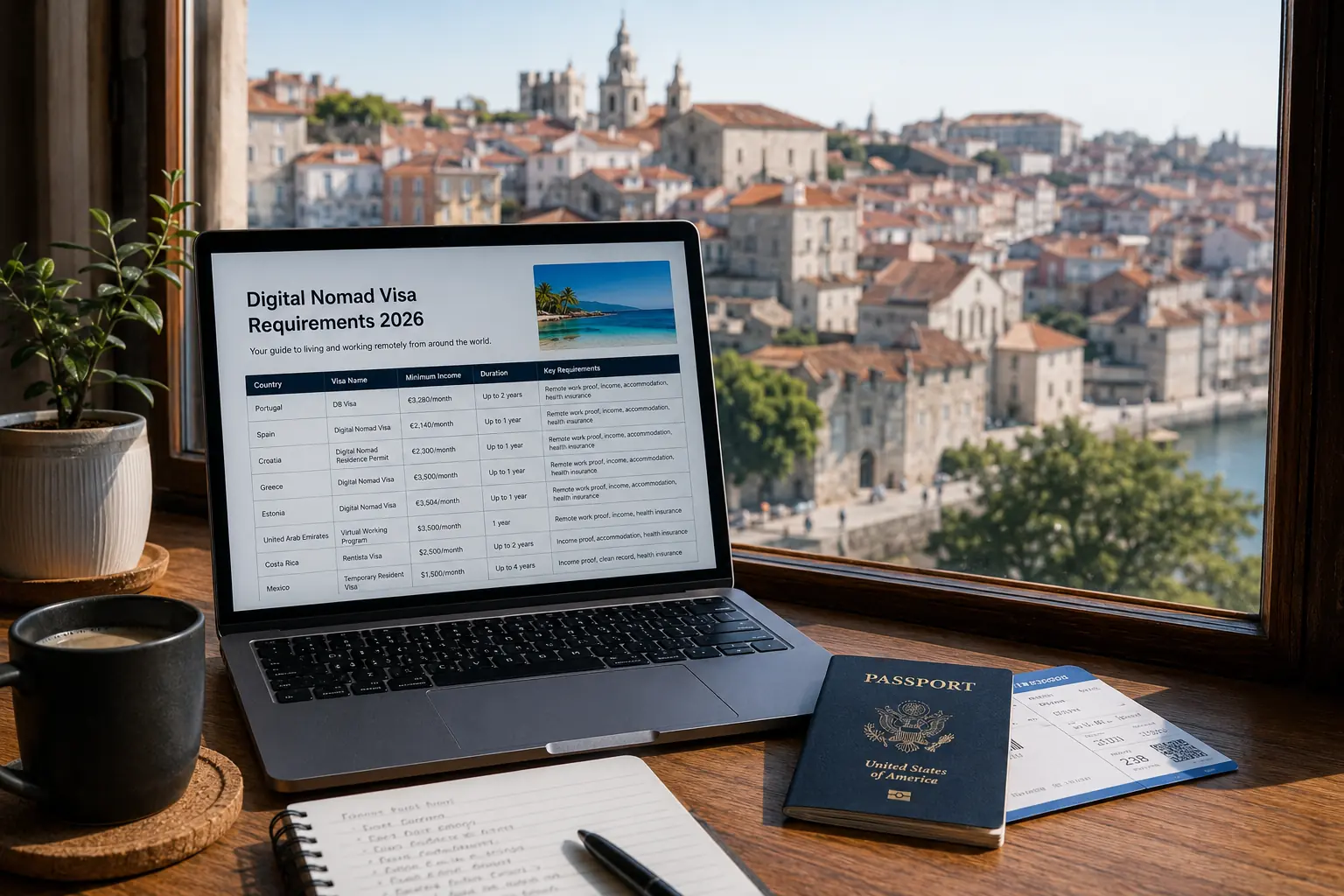
Visa requirements have shifted from simple proof of funds to strict monthly income floors. In 2026, many countries require you to show a consistent monthly income of around $2,000 to $3,000, depending on the cost of living in that region. Applicants often submit bank statements with large, irregular deposits that look like savings rather than steady income. Immigration officers look for recurring paychecks or consistent freelance invoices. If your income fluctuates, provide a year-to-date summary that averages out the spikes and dips.
Ignoring tax residency implications
Holding a digital nomad visa does not automatically make you a tax resident, but it can trigger tax obligations if you stay too long or earn local income. Many applicants assume they remain tax residents only in their home country. This is risky. Some nations have "183-day rules" that declare you a tax resident if you spend more than half the year there. Failing to declare this status can lead to back-taxes and penalties. Check if your home country has a tax treaty with your host country to avoid double taxation, and consult a tax professional before you book your one-way ticket.
No comments yet. Be the first to share your thoughts!