
Verify your identification documents
Before you book a flight or train, you must confirm that every piece of identification you plan to carry is valid and compliant with current regulations. Airlines and border agencies enforce strict rules; presenting expired or non-compliant ID at the checkpoint results in immediate denial of boarding. There are no exceptions for forgotten documents at the security line.
Start by checking your passport expiration date. Most countries require your passport to be valid for at least six months beyond your planned departure date. If your passport expires sooner, you must renew it before traveling. This rule applies to both international trips and many domestic routes that require strict identity verification.
For domestic flights within the United States, the Transportation Security Administration (TSA) enforces Real ID requirements. Beginning February 1, 2026, all travelers must present a Real ID-compliant driver’s license or state-issued identification card to pass through security checkpoints. Look for the gold star in the upper corner of your card. If your license lacks this star and is not due for renewal soon, you must use an alternative form of acceptable ID, such as a valid U.S. passport or military ID.
If you are traveling to Europe, check if you need an ETIAS authorization. The European Union plans to launch the ETIAS system in the last quarter of 2026. While the exact start date is not yet confirmed, visa-exempt travelers will likely need to apply online before departure. Monitor official EU travel sites for updates as the launch approaches.

Ensure your passport is valid for at least six months beyond your return date. Renew it immediately if it is close to expiring.

Confirm your driver’s license has the gold star for domestic U.S. travel. If it lacks the star, plan to use a passport or other TSA-accepted ID.
Check if your destination requires additional documentation, such as an ETIAS authorization for Europe or specific visa stamps for other regions.
Secure required visas and travel authorizations
Starting in 2026, the landscape of entry requirements for major destinations shifts significantly. Travelers from visa-waiver countries must navigate new electronic systems and updated fees. Ignoring these changes can result in denied boarding or entry. Use the comparison table below to understand the specific requirements for the United States, the United Kingdom, and the European Union.
| System | Region | Cost | Validity | 2026 Status |
|---|---|---|---|---|
| ESTA | United States | $21 | 2 years | Active (Fee increased) |
| UK ETA | United Kingdom | £10 | 6 months | Active |
| ETIAS | Schengen Area | €7 | 3 years | Launching Q4 2026 |
Update your ESTA application
The U.S. Electronic System for Travel Authorization (ESTA) remains the standard for Visa Waiver Program travelers. However, 2026 brings a notable fee increase. The application cost has risen to $21, up from previous rates. Ensure you apply at least 72 hours before departure. If your passport expires within six months, you must renew it before applying.
Prepare for the UK Electronic Travel Authorisation
The United Kingdom has implemented the Electronic Travel Authorisation (ETA) scheme. This digital permission is required for non-visa nationals visiting for short stays. The cost is £10, and approvals are typically granted within 24 hours. The ETA is linked to your passport and remains valid for six months or until your passport expires, whichever comes first. Apply through the official UK government app or website.
Get ready for ETIAS launch
The European Travel Information and Authorisation System (ETIAS) is set to launch in the final quarter of 2026. Once active, travelers from visa-exempt countries will need an approved ETIAS to enter the Schengen Area. The fee is €7, and the authorization will be valid for three years. The European Union will announce the exact start date several months in advance. Monitor official EU immigration channels for updates.
Prepare for customs and border entry procedures
Border entry in 2026 involves stricter verification protocols than in previous years. Travelers must anticipate expanded travel bans, mandatory biometric checks, and heightened scrutiny of electronic devices. Understanding these procedural changes before arrival helps manage expectations and reduces the risk of delays or denial of entry.
Expanded travel bans and eligibility
On January 1, 2026, a Presidential Proclamation expanded entry restrictions to cover nationals from 39 countries. This expansion significantly narrows the pool of eligible travelers for visa waiver programs and certain visa categories. If you are a national of one of the affected countries, you must verify your eligibility under the new proclamation before booking travel. Failure to do so may result in denied boarding or entry.
Biometric checks at the border
Biometric verification is now standard for most international arrivals. Expect to provide fingerprints and a digital photograph upon entry. These checks are linked to broader security databases and are processed quickly for low-risk travelers, but they can cause delays for those with complex immigration histories or prior violations. Ensure your documents are valid and match your biometric data exactly.
Device search policies
Customs and Border Protection officers have expanded authority to search electronic devices, including phones, laptops, and tablets. This search can include access to cloud storage, social media accounts, and encrypted files. While rare, refusals to unlock devices can lead to secondary inspection or denial of entry. It is advisable to review your device contents before travel and consider removing sensitive or non-essential data.
Proactive compliance steps
U.S. Customs and Border Protection is taking proactive steps to ensure travelers comply with their terms of admission. This includes sending advance notices to individuals who may be inadmissible due to criminal history or visa violations. Check your compliance status online before travel to avoid surprises at the border. Non-compliance can result in fines, detention, or permanent bans.
What to expect at the checkpoint
At the border checkpoint, have your passport, visa (if required), and proof of onward travel ready. Be prepared to answer questions about the purpose of your visit, duration of stay, and accommodation details. Honesty and consistency are critical; discrepancies between your verbal answers and written documents can trigger further investigation. Stay calm and cooperative throughout the process.
Review airline and baggage policy updates
Carry-on enforcement is tightening across major carriers in 2026. Airlines are increasingly measuring bags at the gate, not just the curb. A bag that fits loosely in the sizer at check-in may be rejected at boarding if it bulges or contains soft items. Verify your bag’s dimensions against the specific airline’s 2026 policy, not just the generic "personal item" guidelines. If your bag is borderline, consider checking it or switching to a harder-shell carry-on that maintains its shape.
Refund and change policies have also shifted. Many carriers now restrict refunds to non-refundable tickets unless you purchase specific flexible fares or travel insurance. Some airlines have reintroduced change fees for basic economy tickets, which were previously waived during the pandemic. Check your ticket type before booking. If your plans are uncertain, factor the cost of flexibility into your total travel budget.
To stay compliant, review your airline’s website directly. Do not rely on third-party booking sites for the most current baggage rules. Look for sections labeled "Baggage" or "Travel Requirements" on the carrier’s official site. This ensures you have the latest information on size limits, weight restrictions, and refund eligibility.

Finalize your travel compliance checklist
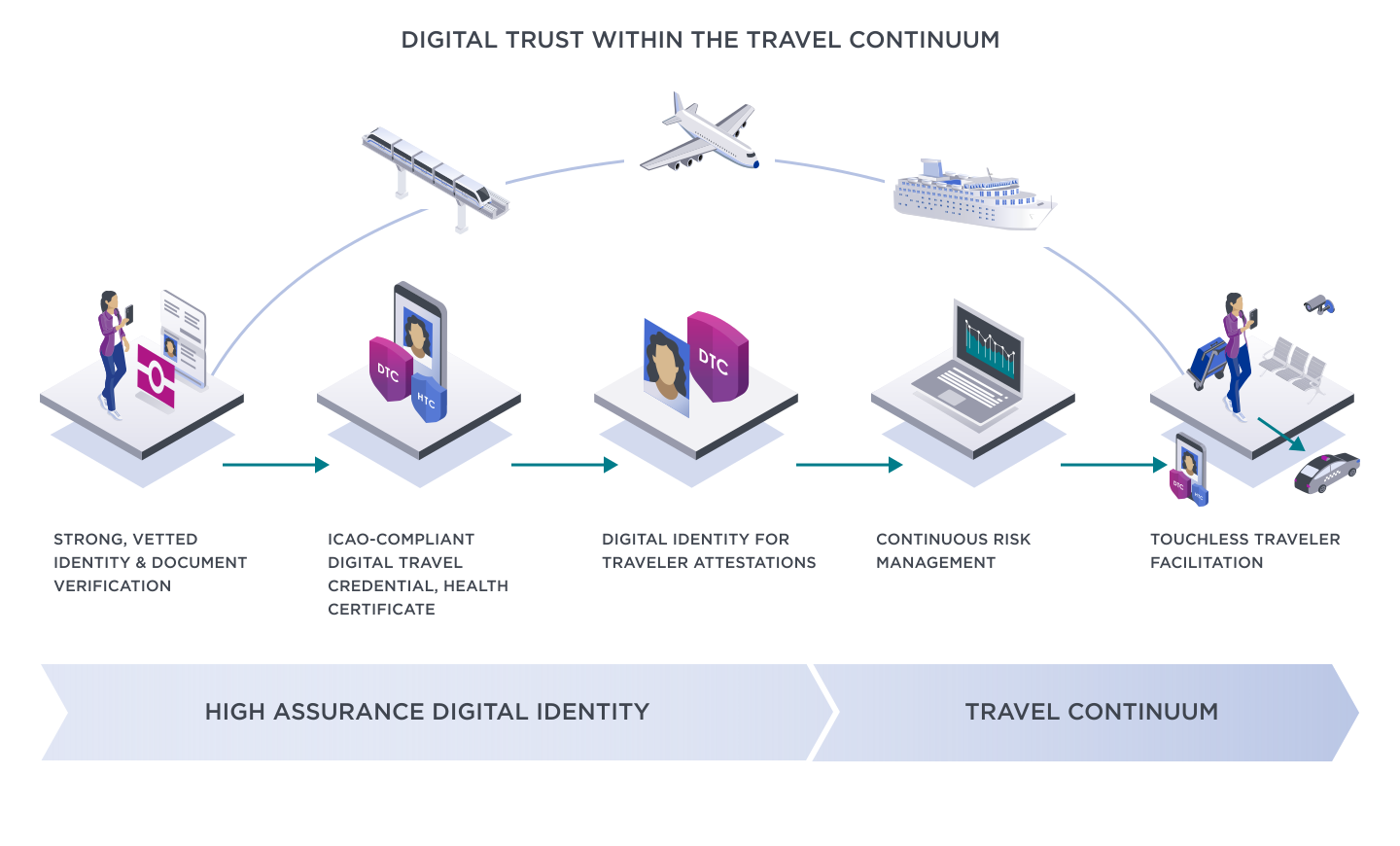
Before you pack, treat your documentation like a security perimeter: one gap can stop the entire flow. Use this ordered sequence to verify every requirement before departure. Each step targets a specific failure point that border agents and airlines check first.
Ensure your passport has at least six months of validity remaining from your return date. For U.S. travelers, confirm you are not subject to the expanded entry restrictions announced in January 2026, which now cover nationals from 39 countries [src-5]. If you are traveling to Europe, note that ETIAS operations begin in the final quarter of 2026, but no action is required yet [src-6].
If your itinerary includes any domestic U.S. flights, you must present a Real ID-compliant license or acceptable alternative by February 1, 2026 [src-6]. This enforcement applies to all domestic air travel, regardless of your international destination. Check your state’s DMV website to ensure your current ID meets the new standard.
U.S. Customs and Border Protection actively monitors traveler compliance with admission terms [src-1]. Review the specific entry requirements for your destination country, including any new carry-on size or weight restrictions that airlines are enforcing more strictly in 2026 [src-4]. Prepare digital or physical copies of your return tickets and hotel reservations.
Many countries now require digital health declarations or arrival cards completed 72 hours before flight. Save the official government apps for your destination to avoid relying on third-party sites that may not be updated. Keep offline copies of your vaccination records and travel insurance policy.
Frequently asked questions about travel compliance 2026
Travelers often worry about the timing of new entry requirements. Here are the answers to the most common questions regarding ETIAS, Real ID, and ESTA updates for 2026.
No comments yet. Be the first to share your thoughts!