

How to pick a 2026 digital nomad visa
Choosing the right digital nomad visa in 2026 requires balancing three hard constraints: income thresholds, tax residency, and duration limits. With an estimated 43 million remote workers now navigating cross-border regulations, popular hubs have tightened their requirements to filter applicants. Understanding these criteria upfront prevents wasted application fees and ensures you qualify for the specific visa category that matches your financial profile.
Income thresholds
Most countries now require proof of stable foreign income. In 2026, the average monthly income requirement for top destinations ranges from $1,500 to $3,500, depending on the cost of living in that jurisdiction. For example, Portugal and Spain have adjusted their thresholds to reflect inflation and housing costs. You will need to provide recent bank statements or employment contracts as proof. Ensure your income is verifiable and consistent, as one-off freelance payments may not satisfy stricter immigration officers.
Tax implications
Your visa type dictates your tax obligations. Some digital nomad visas, like Spain's Beckham Law (where applicable) or Croatia's Digital Nomad Residence Permit, offer temporary tax exemptions or reduced rates for foreign-sourced income. Others, like Estonia's e-Residency combined with a residence permit, may still classify you as a tax resident if you spend more than 183 days in the country. Consult official government immigration portals or a tax professional specializing in expat law. Do not assume "nomad" means "tax-free"; residency status often triggers local tax liabilities.
Duration and renewability
Visa lengths vary from 6 months to 2 years, with varying renewal options. Short-term visas (6-12 months) are ideal for testing a location, while longer permits (1-2 years) offer stability for remote teams. Check if the visa allows for in-country renewal or if you must leave the Schengen area or country entirely. Some countries, like Malaysia's DE Rantau, allow extensions, while others require a fresh application. Plan your timeline based on your work contract length and travel goals.
Start by listing your non-negotiables: minimum income, desired stay length, and tax sensitivity. Then, cross-reference these against the official visa criteria of your target countries. This focused approach saves time and ensures you apply for a visa that aligns with your actual remote work lifestyle.
Spain and Portugal lead European options
Spain and Portugal remain the primary entry points for remote workers seeking a European digital nomad visa. Both nations offer established frameworks, but their 2026 updates have shifted the balance of value. Spain has streamlined its application process to attract more long-term residents, while Portugal has tightened its tax regime, altering the financial calculus for newcomers.
Spain’s Ley de Emprendedores now allows for faster processing of visa renewals and includes dependents more flexibly. The income requirement sits around €2,600 monthly for the main applicant. Crucially, Spain offers a special tax regime for new residents, capping income tax at 24% for the first six years, which is a significant draw for high earners compared to standard progressive rates.
Portugal’s Regime for Non-Habitual Resident (NHR) has been reformed. The new 2026 rules restrict the special tax status to specific high-value activities, meaning most remote workers will now pay standard Portuguese income tax rates, which can exceed 48%. However, Portugal still offers a straightforward residency path and a lower initial income threshold, typically around €3,480 monthly (based on 8x the minimum wage), making it accessible for those prioritizing long-term residency over immediate tax savings.
The choice between these two European hubs depends on your financial profile and long-term goals. If you are a high earner seeking tax efficiency, Spain’s current framework is more competitive. If you are building toward citizenship or have a moderate income, Portugal’s residency pathway remains robust despite the tax changes.
| Feature | Spain | Portugal |
|---|---|---|
| Monthly Income Threshold | ~€2,600 | ~€3,480 |
| Tax Regime (2026) | 24% flat for 6 years | Standard rates (NHR restricted) |
| Visa Initial Duration | 1 year + 2 extensions | 1 year + 2 extensions |
| Path to Citizenship | 10 years legal residence | 5 years legal residence |
| Family Inclusion | Spouse, children, parents | Spouse, minor children |
Estonia and Croatia offer EU access
Estonia and Croatia provide distinct pathways into the European Union for remote workers. Estonia is the digital pioneer, while Croatia offers a blend of coastal lifestyle and growing tech infrastructure. Both countries have streamlined their digital nomad visa processes to attract global talent.
Estonia: The Digital Pioneer
Estonia’s e-Residency program is the backbone of its appeal, but the actual Digital Nomad Visa is the key to legal residency. This visa allows you to live in Estonia for up to one year while working remotely for a company outside the country. The application process is entirely online, reflecting the country’s reputation for efficient digital governance.
Estonia is ideal for those who prioritize infrastructure. The country has some of the fastest internet speeds in the world and a highly digitized public service system. You can manage banking, taxes, and government services with minimal in-person interaction. This makes it a low-friction environment for tech-focused nomads who value efficiency over traditional scenic beauty.
Croatia: Coastal Living and Visa Access
Croatia has emerged as a top pick for 2026, combining EU membership with an unbeatable coastline. The Digital Nomad Residence Permit allows remote workers to stay for up to one year, with the option to renew. Unlike Estonia’s purely digital focus, Croatia offers a lifestyle-driven experience with access to the Adriatic Sea and a rich cultural heritage.
The application requires proof of stable income and health insurance, similar to Estonia. However, the appeal lies in the environment. You can work during the day and enjoy the Mediterranean climate in the evening. Croatia is particularly attractive for nomads who want to balance productivity with leisure, offering a vibrant expat community in cities like Zagreb and Split.
Thailand and Latin America for lower costs
Thailand and several Latin American nations remain top choices for budget-conscious remote workers. While European visas often demand high income thresholds, these regions offer flexible digital nomad programs with lower financial barriers to entry. The trade-off is a wider variance in income requirements and processing times.
Thailand
Thailand offers a clear pathway for remote professionals through its Long-Term Resident (LTR) visa and the new Thailand Privilege Card options, though the dedicated "Digital Nomad Visa" is still evolving. Income requirements are moderate compared to Western Europe, typically hovering around $800 to $1,000 per month in proof of funds or remote salary. Bangkok and Chiang Mai provide robust coworking infrastructure and affordable living costs, making it easy to sustain a long-term stay without draining savings.
Colombia
Colombia’s Digital Nomad Visa requires proof of monthly income ranging from three to eight times the minimum wage, effectively setting a floor around $750 to $1,000 per month depending on current exchange rates. This low threshold makes it one of the most accessible visas in the world. Bogotá and Medellín offer vibrant tech scenes and reliable internet, allowing nomads to live comfortably while keeping monthly expenses significantly lower than in the US or UK.
Costa Rica
Costa Rica’s Rentista and Digital Nomad visas require higher proof of income than Colombia, often citing around $3,000 per month for the Nomad Visa. However, the country’s established Pura Vida lifestyle and stable political environment justify the cost for many. Remote workers benefit from a time zone that aligns with North American business hours and a high quality of life, provided they budget for the higher cost of living in popular expat hubs like Santa Teresa or Escazú.
Essential gear for remote work abroad
Picking the right digital nomad visa is only half the equation; your actual ability to work depends on having a reliable setup that survives airport transfers, unreliable hotel Wi-Fi, and long flight hours. The goal is to build a "digital nomad starter kit" that is lightweight, durable, and capable of turning any café or co-working space into a functional office.
Start with connectivity and power. A global eSIM provides the most consistent internet access across borders without the hassle of swapping physical cards. Pair this with a high-capacity power bank and a universal travel adapter that covers US, EU, and UK outlets, ensuring your devices stay charged regardless of your location. Noise-canceling headphones are equally critical for blocking out distractions in shared workspaces or during transit.
For your primary workspace, prioritize portability without sacrificing screen real estate. A lightweight laptop is non-negotiable, but adding a portable monitor can significantly boost productivity for coding, design, or multitasking tasks. Finally, protect your investment with a rugged laptop sleeve and a compact, TSA-approved locking kit for your bag.


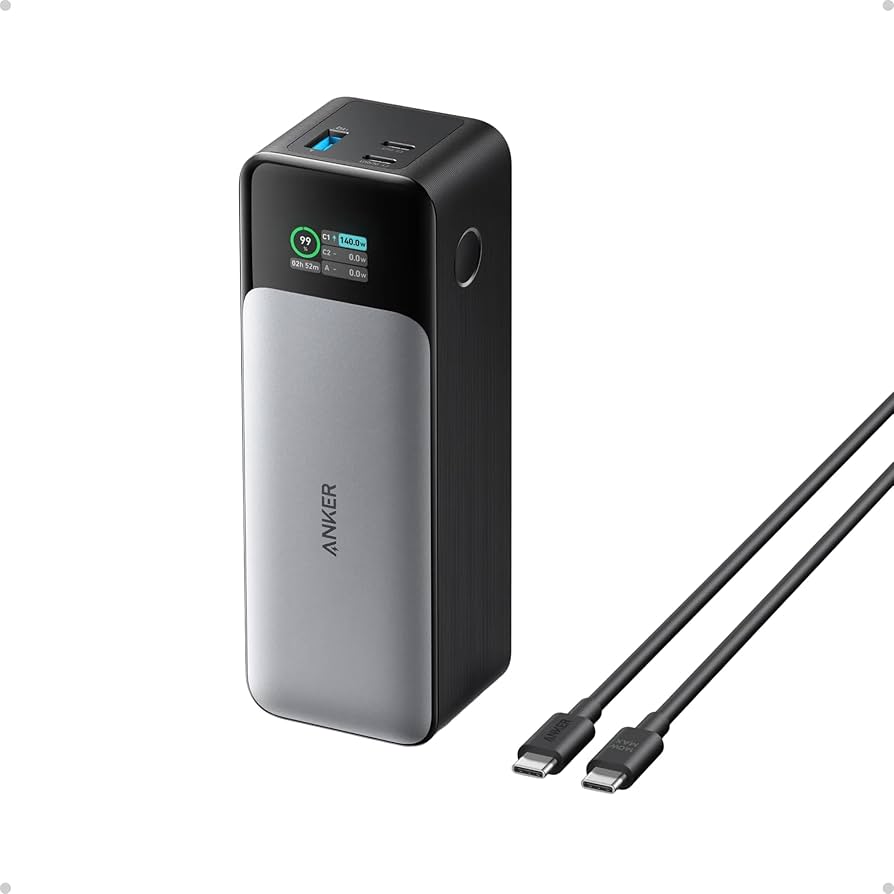

As an Amazon Associate, we may earn from qualifying purchases.
Building this core kit ensures that your legal right to work abroad is backed by the practical tools needed to actually do the work. Focus on quality over quantity; carrying fewer, higher-quality items reduces baggage weight and simplifies your daily routine.
Common questions about 2026 nomad visas
Remote work has fundamentally shifted how people approach international residency, with an estimated 43 million individuals working remotely across multiple countries in 2026 [1]. As the landscape evolves, applicants frequently ask how to plan around the changing rules and income thresholds that define these opportunities.
What is the best digital nomad visa for 2026?
There is no single "best" visa, as the optimal choice depends on your income level, desired stay length, and tax situation. The most attractive options in 2026 include Portugal, Spain, Croatia, Greece, Estonia, and Thailand, alongside several Latin American destinations. Each offers different benefits, from tax neutrality to lower cost-of-living bases.
What are the digital nomad trends in 2026?
Beyond the visas themselves, 2026 is defined by accelerated remote work infrastructure and a rise in mid-term furnished rentals. Governments are adjusting rules to manage influxes, meaning income requirements and application procedures are becoming more standardized but also more competitive across popular hubs.
Do I need to pay taxes in my home country?
This is the most critical misconception to address. Holding a digital nomad visa does not automatically exempt you from taxes in your home country, particularly if you are a US citizen. Many nomad visas offer local tax benefits only for income earned within that specific country. You must consult an international tax expert to determine if you remain a tax resident of your home country.
No comments yet. Be the first to share your thoughts!